
AI cover letters
Cover letters, written for the case
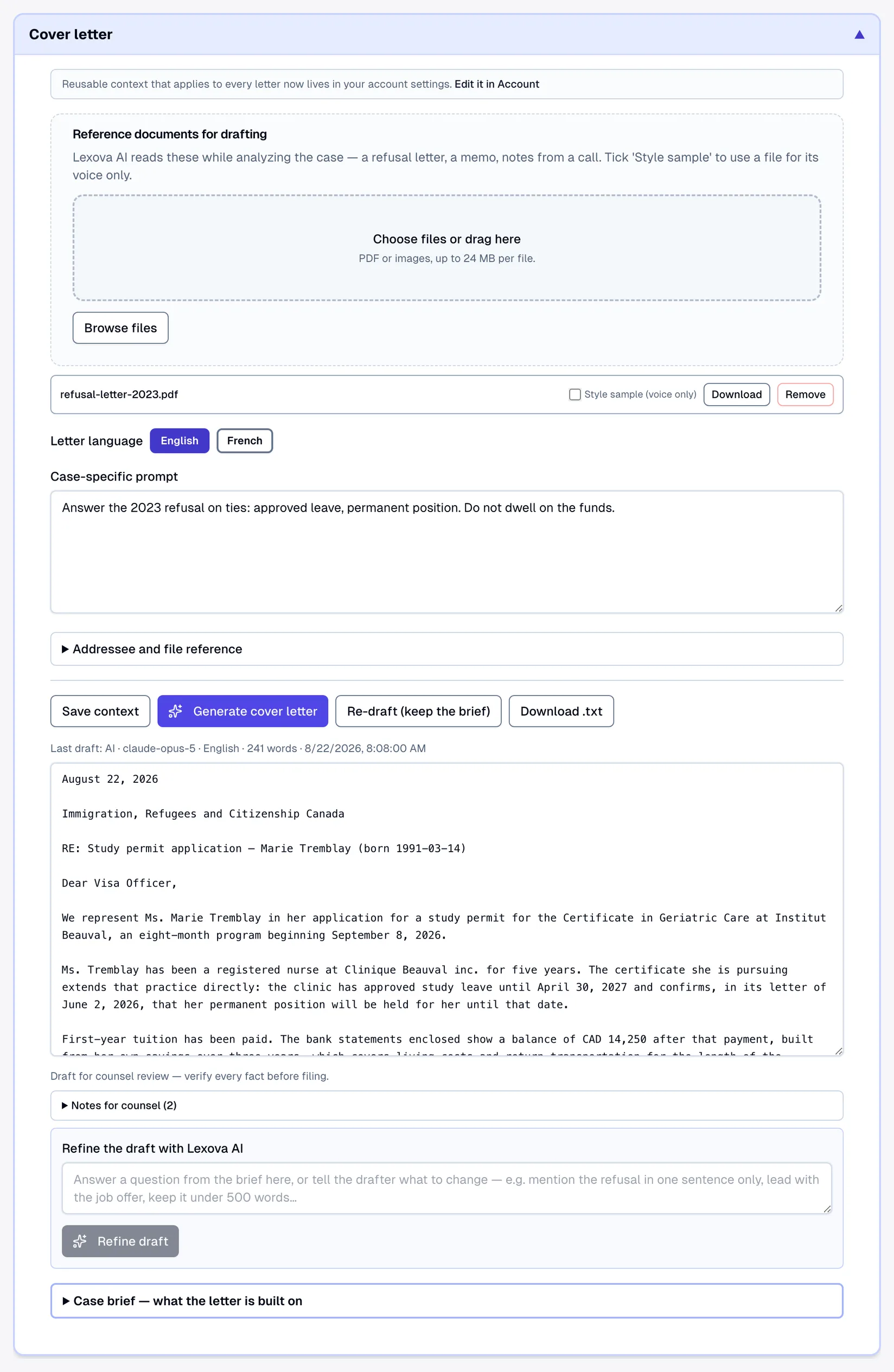
Lexova AI first reads the file and writes a case brief — scope, legal test, ranked strengths, weaknesses to address or leave silent — then drafts the letter from that brief in a practitioner's voice. You refine it in a dialogue and sign it.
August 22, 2026
Immigration, Refugees and Citizenship Canada
RE: Study permit application — Marie Tremblay
Dear Visa Officer,
We represent Ms. Marie Tremblay in her application for a study permit for the Certificate in Geriatric Care at Institut Beauval, an eight-month program beginning September 8, 2026.
Show full screenShow less
See it in action
A submission letter that argues the case.
Transcript
Lexova AI reads the Tremblay file and writes a case brief first: the legal test, the strengths, and how to handle each weakness. Then it drafts the letter from that brief, in a practitioner's voice. It's signed with your name, your RCIC number and your firm, and nothing is ever sent on its own. Ask for it firmer on her ties to home, in one line, and press Refine. That one paragraph is revised, and the rest stays intact. Then you review it, and you sign it yourself.
The video starts only when you press play; nothing is downloaded before that.
A good submission letter ties the package together — but writing one from a blank page for every file is slow. Lexova reads the case it already holds (program, applicant facts, history and documents) and drafts a letter built on those specifics, not a generic template. You stay the author: edit, restructure and approve.
How it works
A case brief first
Lexova AI analyses the program, the answers, the histories and the documents on file and writes a brief: the legal test to meet, the strengths worth arguing with their evidence, the weaknesses and how to handle each.
Drafted from the brief, not the file
The letter argues the case rather than listing it: it cites a document only where it proves a point, never enumerates the package, and marks any fact the file does not establish for counsel to confirm.
Refine in a dialogue, then sign
Ask for a change in plain words — shorter, firmer on the ties to home, address the gap — and the letter is revised while the rest stays intact. Your name and firm sign it; nothing is sent on its own.
Why it matters
Tailored, not templated
Every letter reflects the actual facts of the case, not boilerplate.
Editable draft
The draft is a starting point you fully control — nothing is sent automatically.
English or French
Draft in the language of the application, with professional immigration phrasing.
Frequently asked questions
Is the letter ready to send as-is?+
It's a draft. The professional reviews, edits and approves it — Lexova never submits anything on its own.
Where does the content come from?+
From a case brief Lexova AI writes first — the scope of the application, the legal test, the strengths with their evidence, the weaknesses and how to treat each — built from the answers, histories and documents already on the case. The letter is drafted from that brief, so it argues the file instead of repeating it.
Can the letters sound like mine?+
Yes. On your Account page, upload one of your own letters as your template — a Word document, a PDF or a photo of a letter. Lexova AI takes its tone, rhythm and organisation from it — the voice only: the facts always come from the case, and the greeting and the final sign-off stay Lexova's. You can replace or remove the template at any time.
Explore more
Run your firm on Lexova
Start today, or talk to us about Enterprise.